
The “Longer, Wider, Faster” Era
was ushered in by a desire to make Formula 1 the undisputed pinnacle of motorsport again, and the retirement of reining World Champion Nico Rosberg changing the dynamic at the front. This era featured the cars with the most amounts of grip to date. Wider Tyres, wider and longer chassis with increasingly intricate bodywork, and a rising driver standard resulted in the fastest lap times ever, ultimately leading to… Mercedes domination, again? The mathematical model seeks to eliminate the factor car by only measuring drivers against their teammates.
How Does It Work?
My model was inspired by the amazing f1metrics model and therefore shares a significant portion of its methodology.
Step 1 was to introduce a unified points system. P1 gets 10p, P2 gets 10p*0.72=7.2p, P3 gets 7.2p*0.72=5.18p …. etc. all the way to P20. Driver related DNFs are scored with 0p.
Then the 2 teammates get their points assigned for every race. Races where one driver has mechanical issues are excluded (or corrected if possible). Driver errors and other incidents are also excluded (or corrected if possible). Now the points are tallied up and converted on an s-curve. The difference between the two values of the drivers is the performance difference between them.
In combination with functions for age and experience (I use those of the f1metrics model), doing this with all drivers over a lot of seasons, results in a pretty sturdy web of relative driver performances. While building this web, I am not looking for a compromise of all seasons but instead a most perfect fit.
Season Ratings
Now that I have performance ratings (later referred to as ceiling/pace/potential) for the drivers, I can get a value for the car/team in a season since
(points)=(driver performance)+(car performance)
and therefore
(car performance)=(points)-(driver performance)
The driver errors are then added back in, giving a new points total, and through
(points)-(car performance)=(driver performance)
I get the actual performance of the drivers in that season. Those performance ratings are then translated back over the s-curve to give a “points per race rating” which goes from 0-10. That is then multiplied by 10 to get a neat driver score of 0-100.
As you can see, the major difference to the f1metrics model is the handling of driver errors. In my opinion this results in more accurate ratings as the amount of errors a driver makes can vary widely from season to season. Secondly, it has the advantage of untieing teammates in a season. A drivers rating won’t automatically get boosted just because his teammate is having a shocker.
At its core the model is assessing a drivers ability to score points with
(total points)=(possible points)-(lost points)
This can be abstracted onto the drivers. Simplified the drivers’ season ratings can then be understood as
(driver rating)=(driver pace)-(driver mistakes)
To help give some perspective for the ratings I made these tiers:
- S – above 89
- A – above 82
- B – above 73
- C – above 62
- D – above 50
- F – below 50
From going through all the data and seasons, I would say that generally a good season has a score above 73. Keep in mind, though, that there are no real cut lines.
Below, all drivers that managed to score higher than the average of the era in question are listed. Each driver has their own entry including a short summary and an overall rating. This rating is derived by calculating a weighted average over all the seasons of this era, with the best season weighing as much as all the other lower rated seasons together, the 2nd best season in turn weighing as much as all the other lower seasons together, and so on; it works like the standardized A paper sizes.
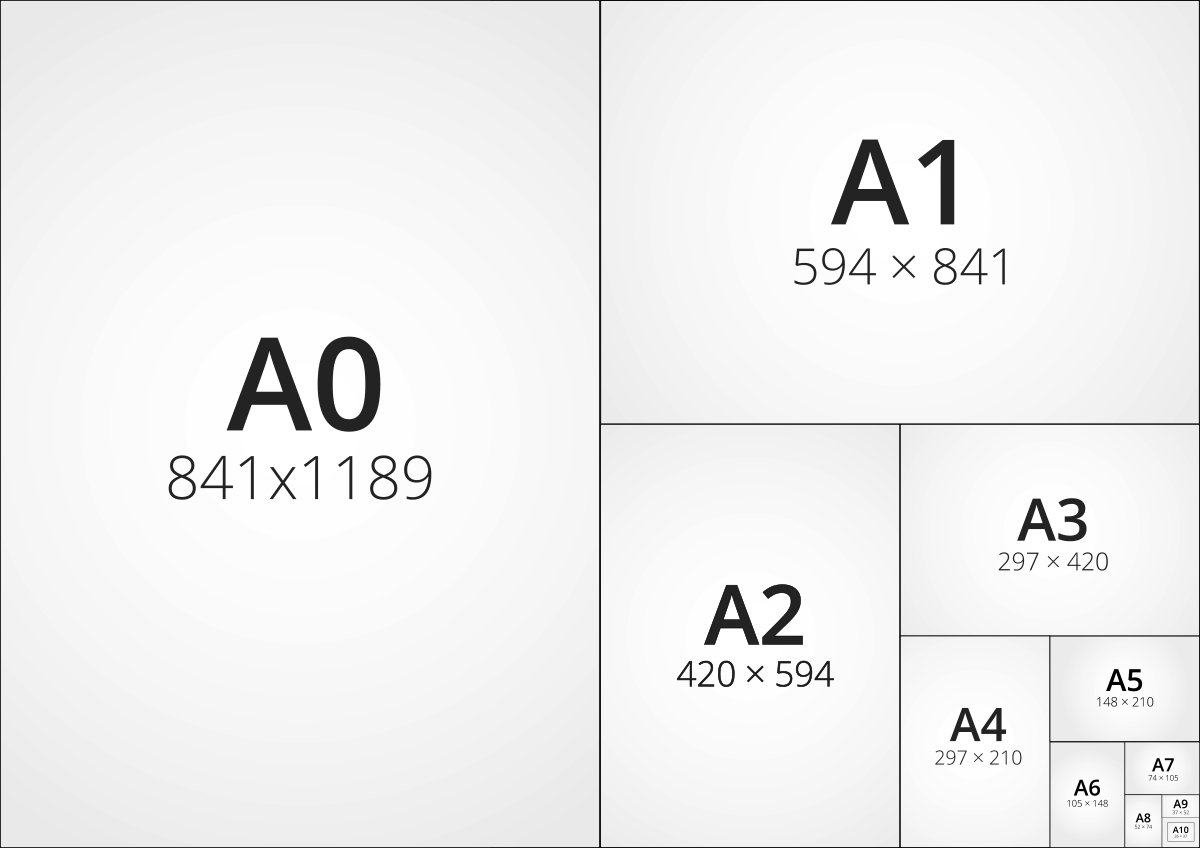
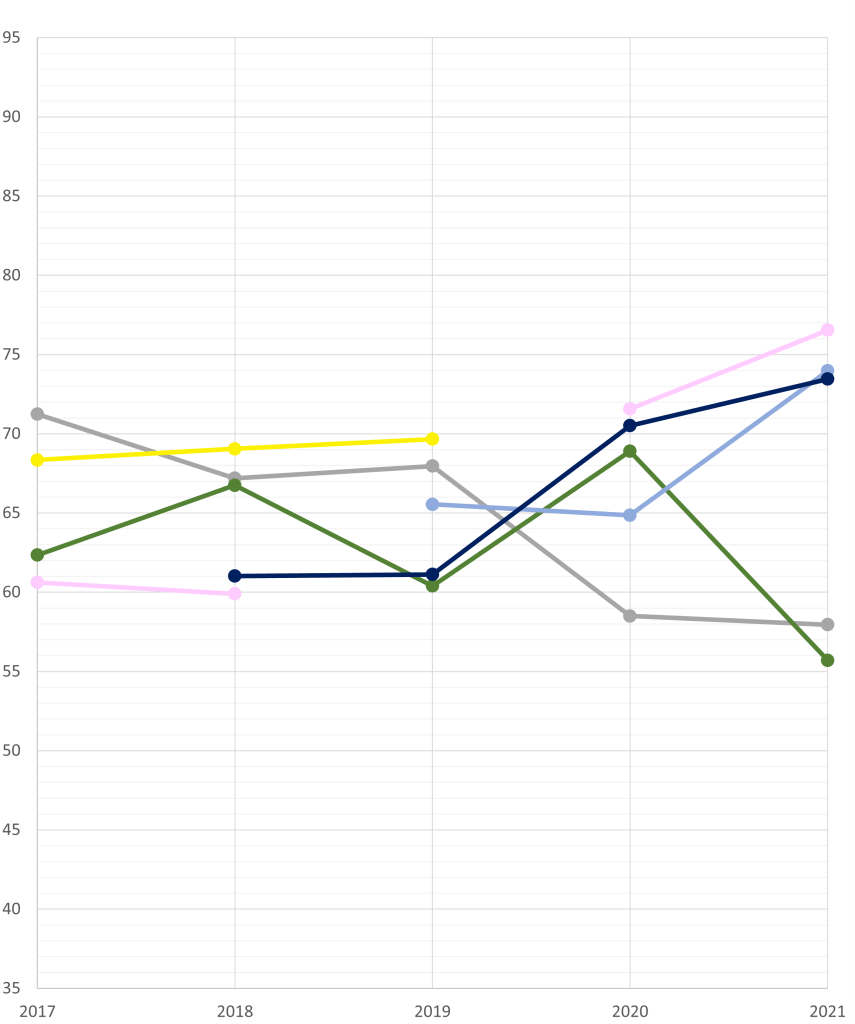
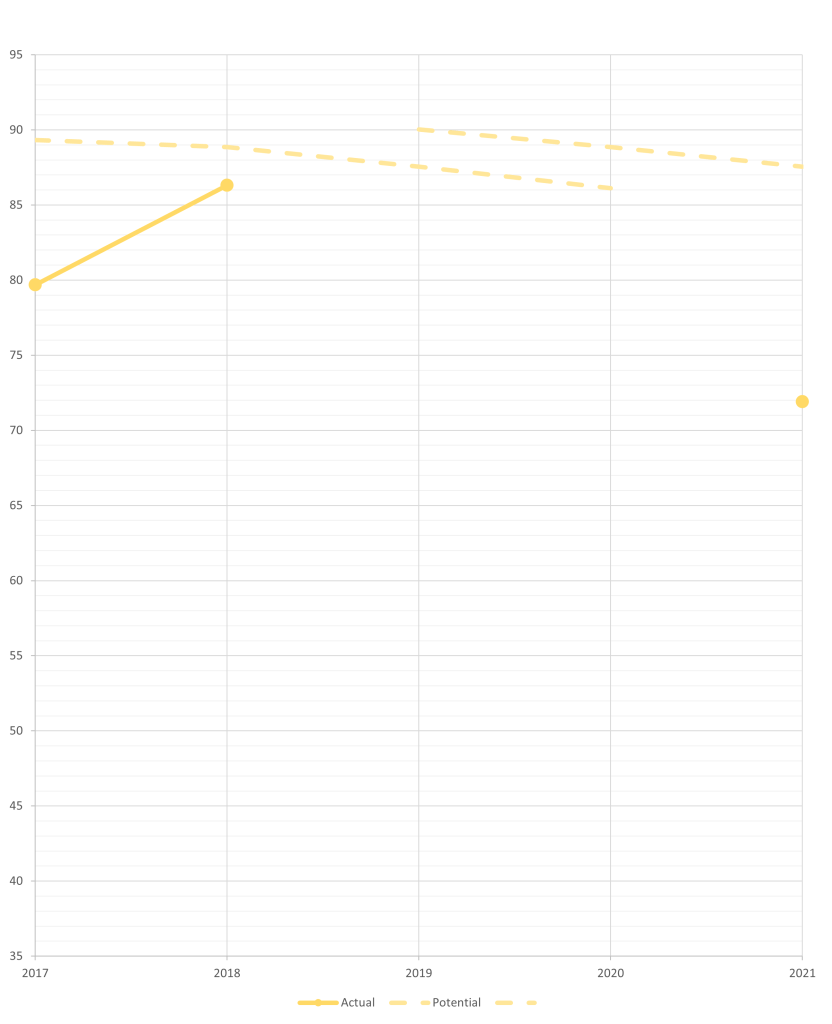
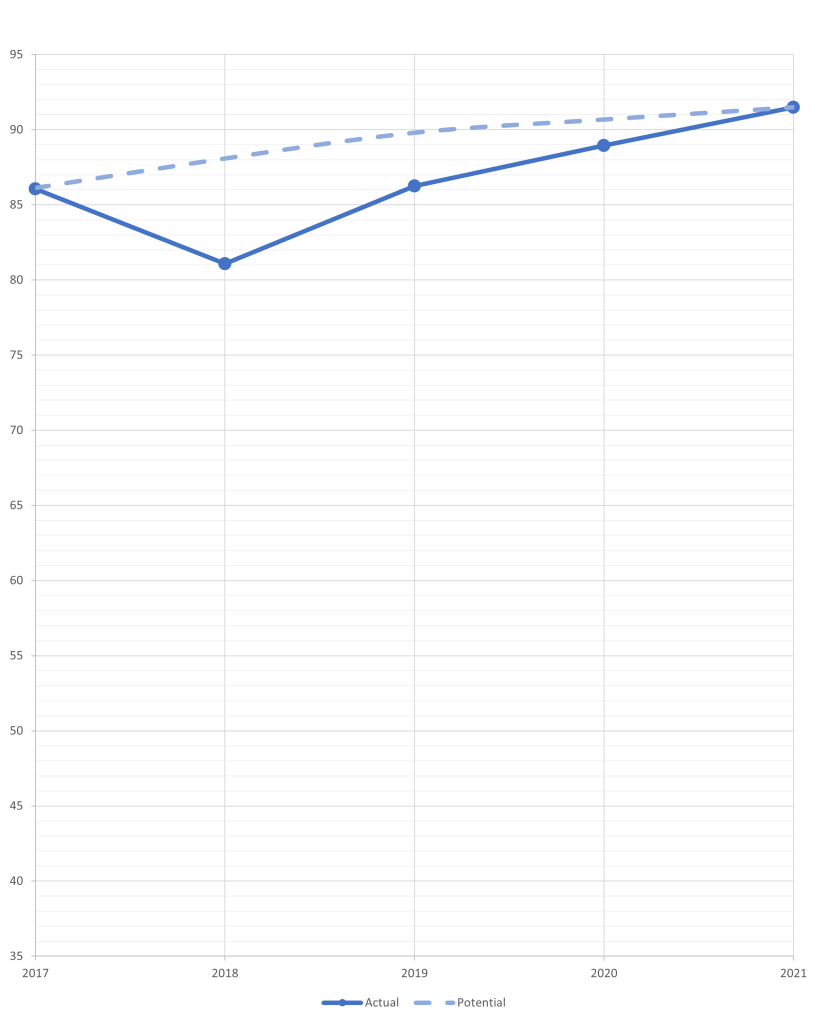
One of the advantages of this method is the adaptability concerning the number of seasons included. It allows for consideration of all seasons in the time frame, without majorly disadvantaging either those with more seasons, or those with fewer. Also included is a graph documenting the change of their season ratings and potential through the years. The potential roughly equates to pace and acts as a ceiling (moving with age and experience). It should give you a better understanding and context for the actual driver ratings in terms of underperformance, mistakes, consistency, speed etc.
The Baseline
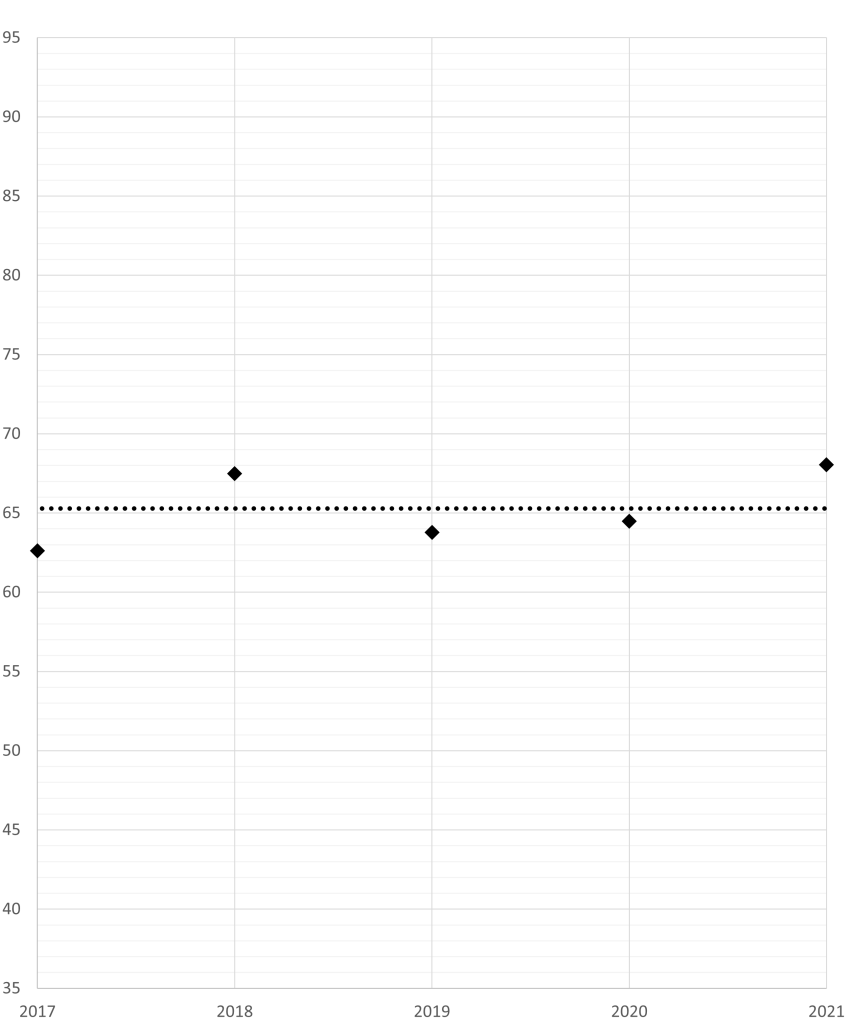
Through 2017-2021 the average driver would be expected at a score of 65.3 which is on the higher end historically but far from an outlier. 2019 saw a step back, at least partially owed to a relatively big rookie class. Talented as they may be, they didn’t begin their F1 careers by immediatley challenging the status quo. 2021 is rated as this era’s highest quality grid because, among others, the aforementioned young drivers start to pay off massively. Over the 5 years of this era 15 drivers beat the average.
The “Above Average Assortment”
15 – Sergio Perez
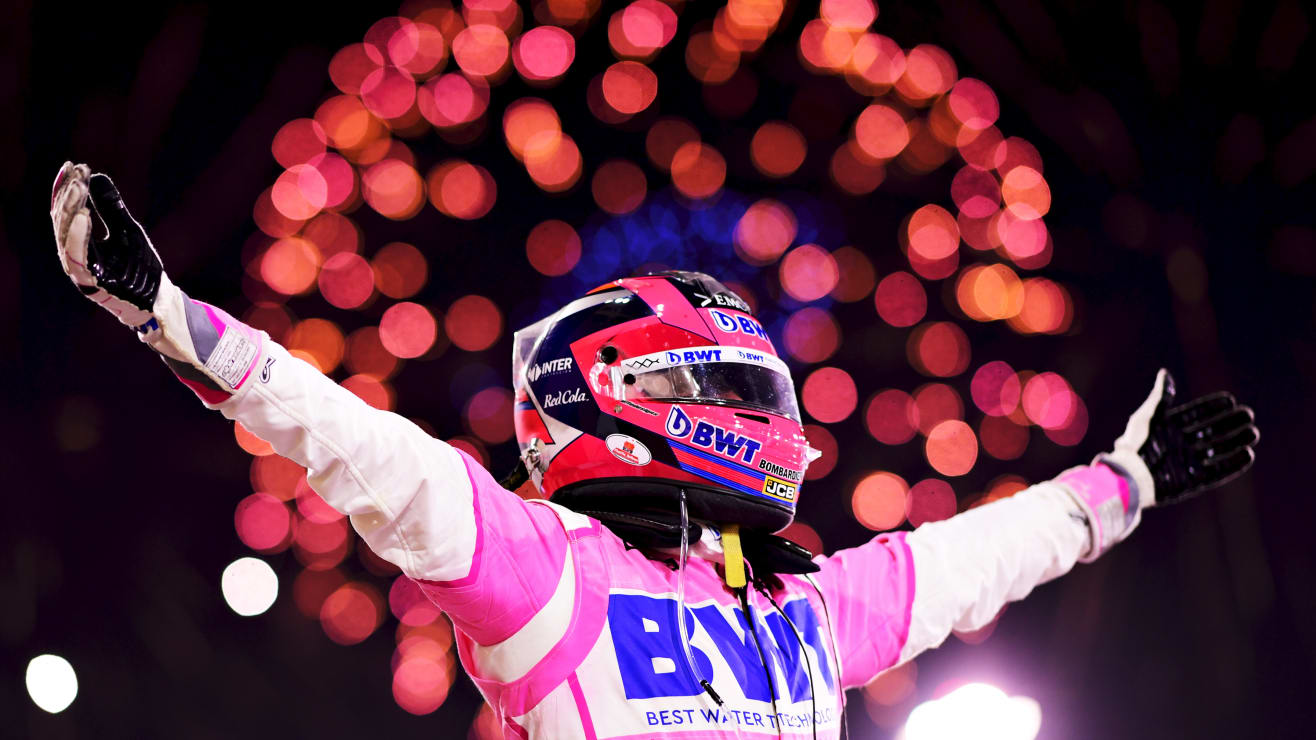
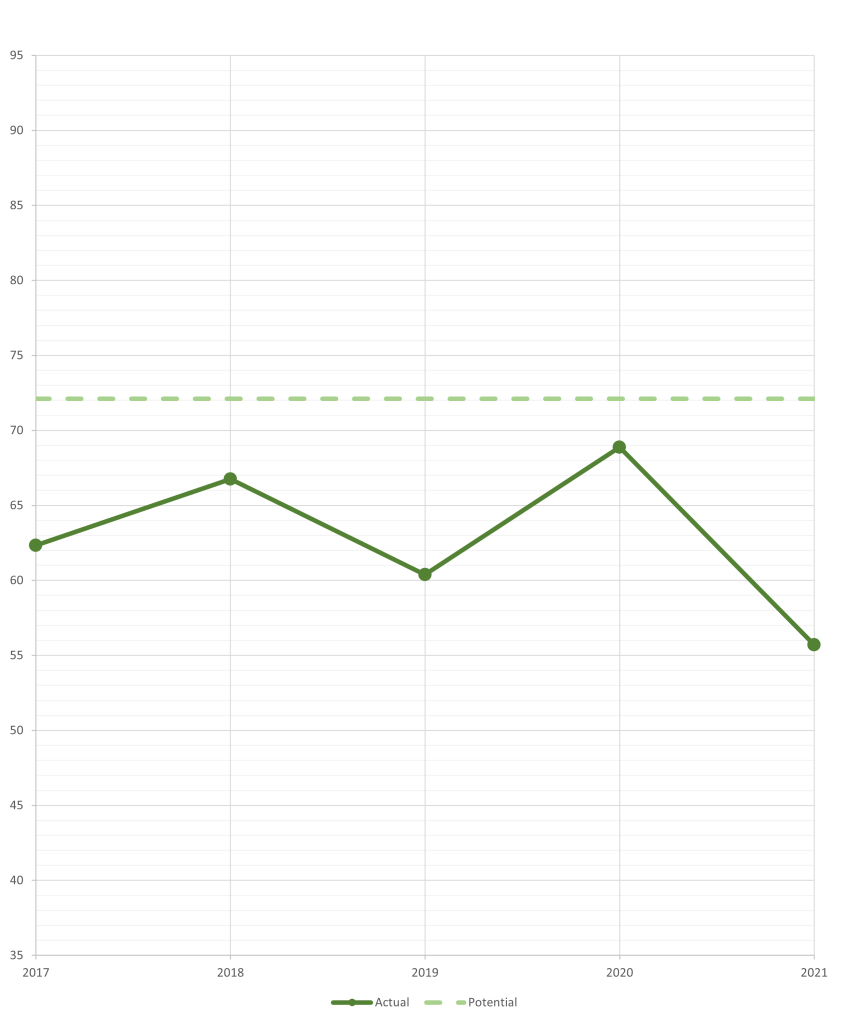
Maybe this day’s most classic midfield driver, Sergio Perez also finds his spot towards the middle of the field in driver quality. The model rates Perez overall slightly above average across 2017-2021. By the models estimate, he could have done the same Bottas did at Mercedes. They seem to get to the same level with opposite strengths and weaknesses. Whereas Bottas usually qualifies very well, but lacks the ability to cut through the field effectively, Perez has difficulties in qualifying, but makes up places on Sundays. What he evidently can’t do, is driving a car with a very loose rear to it’s limit. It is very fitting that Perez’ most memorable scene of 2021 was him acting as a roadblock for a faster car. Throughout the year he made multiple errors in an attempt to not be off the pace. It’s a shame he followed his best season up like that.
14 – Stoffel Vandoorne

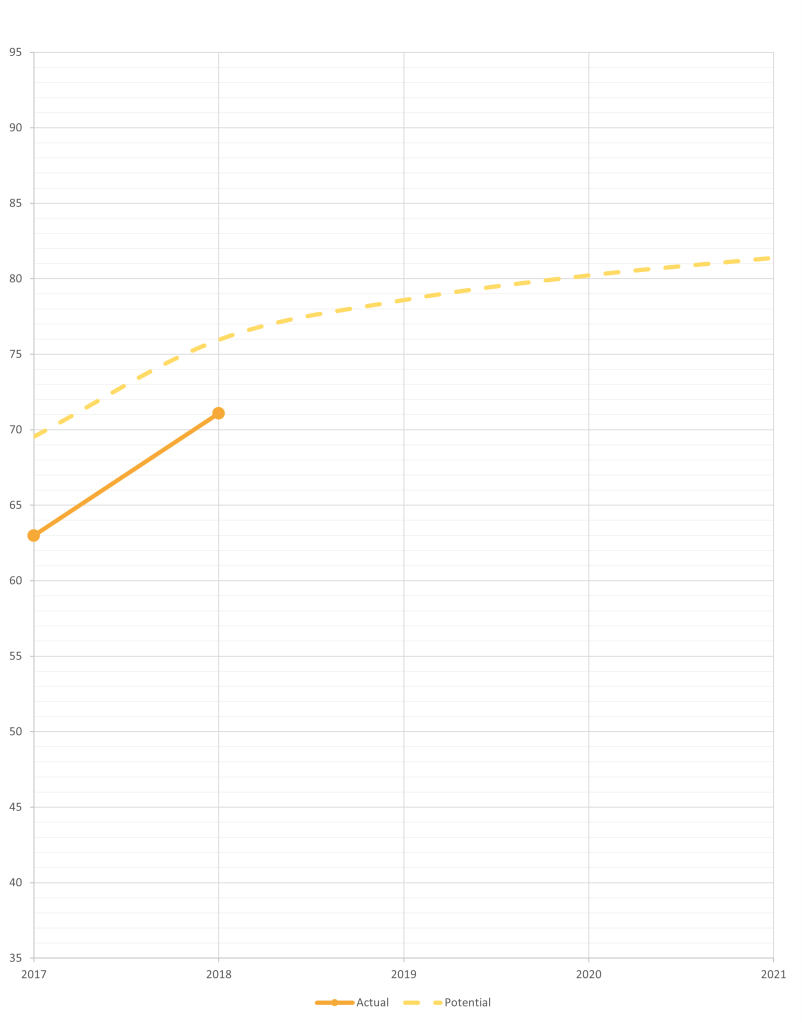
This is not the first mathematical approach to determine that Stoffel Vandoorne was done dirty by his comparison to Fernando Alonso. The model suggests Vandoorne could have potentially reached a similar level as Carlos Sainz. Ultimately, however, McLaren did everything right. Trading Stoffel for either Sainz in the short term (although Carlos was a way bigger gamble at the time than it seems now) or Norris in the long term would have been a good deal. The real shame is, that he never got another chance at a different team.
After 2019, the graph shows Vandoorne’s expected potential had he been on the grid continuously.
13 – Valtteri Bottas


Valtteri started his Mercedes tenure with a really solid season in 2017. Sadly, it would only go downhill from there. 2020 and 2021 were riddled with mistakes and look like the hangover from the depressing realization of 2019 that even when giving it his all he couldn’t match Hamilton. These seasons hold Bottas back a bit compared to similarly skilled drivers Perez and Hulkenberg.
2019 is without a doubt the most interesting season of his, because his delta to Lewis is a bit smaller than usual. By default, this is taken as a Hamilton underperformance, but my first thought was of one ominous Bottas 2.0. What if this really was a Bottas overperformance? To be clear, this wouldnt be a huge jump but it would just inch Bottas 2019 season ahead of his 2017. Mind you, there is no trace of a higher performance in any following season. Excluding the Japanese GP would pull the delta back to the expected value. A lot of things went Bottas’ way that weekend, starting with outqualifying Hamilton by less than 1 hundreth of a second and his fantastic reaction time at the start. However he seemed quicker throughout the weekend and was truly amazing in the race. Maybe you just have to decide for yourself if Bottas 2.0 was real.
12 – Nico Hulkenberg

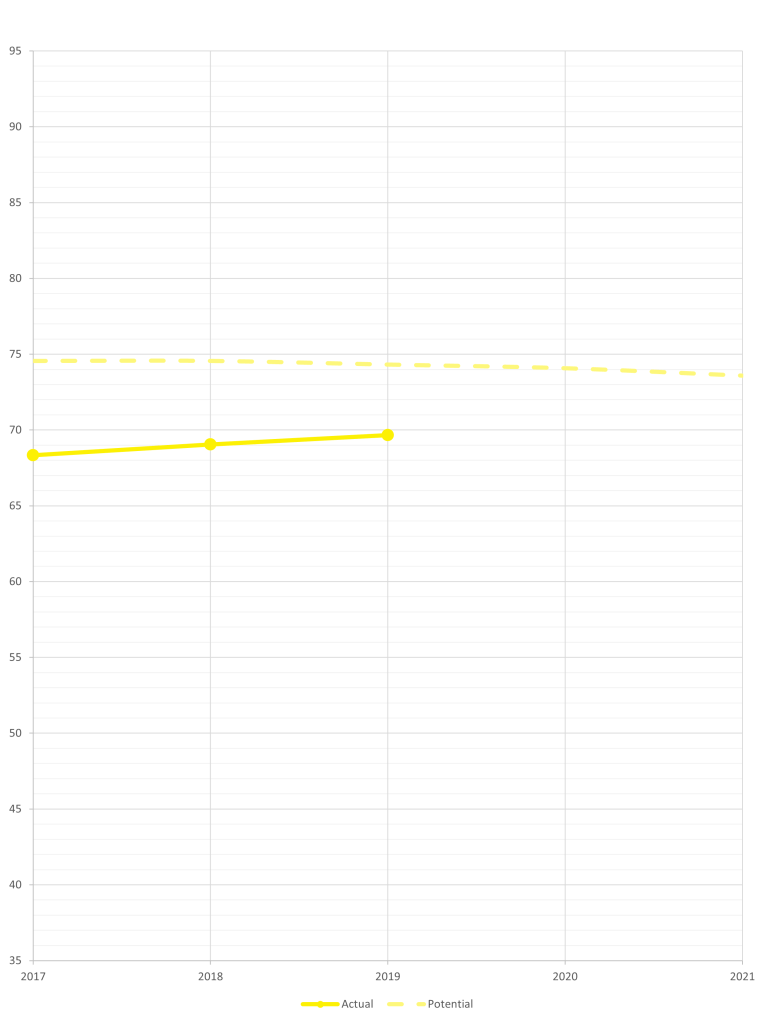
The highest rated of the Mid-Trilogy, Nico Hulkenberg only took part in 3 of the 5 seasons. He never had the chance to measure himself against a truly great driver but, like Bottas and Perez, he would not be expected to really be competitive with one. Between 2017 and 2019 the three of them were very closely matched, before Hulkenberg lost his drive and Bottas lost his drive.
11 – Pierre Gasly


If we look at Pierre Gasly’s 2019 at Red Bull and at Torro Rosso in isolation, he scores 55.4 against Verstappen and 69.2 against Kvyat. It’s a shame that Pierre got the early call up to Red Bull. They should have left him in the oven a little longer at Torro Rosso, and bridged the gap with someone from outside the Red Bull camp; Vadoorne was free. Alongside Verstappen, Gasly’s performance usually fits with his current profile. He had the pace, but the problem seems to have been, that he couldn’t (or wasn’t willing to) put his elbows out, when big points were possible. Now, Gasly would be exactly what Red Bull are looking for, and with a bit more maturity, he could have been that guy in 2020 or 2021, I’m sure. A potential Albon-Gasly pairing at Torro Rosso in 2019 (and maybe 2020) doesn’t sound too bad either.
Gasly is still less certain, relative to the other drivers on this list. Future performances will give further information and are going to help narrow him down but he is definitely a very good driver at his peak, and also definitely not a great one.
10 – George Russell
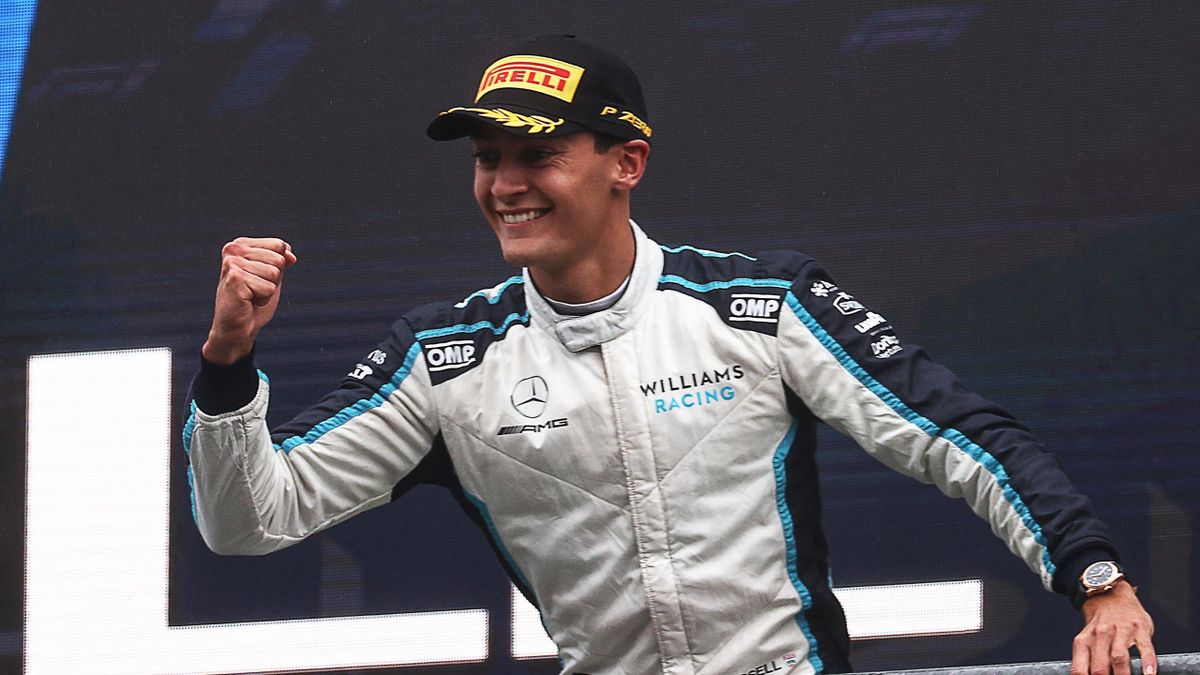
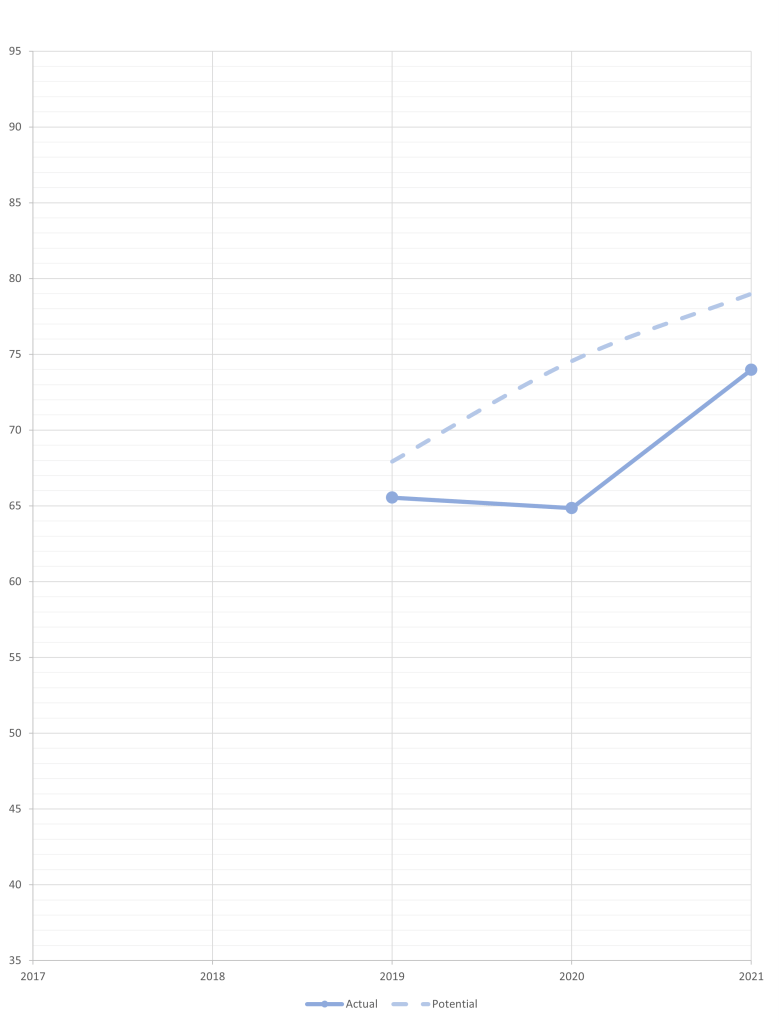
George Russell is expected to have a ceiling similar to Sebastian Vettel. That assessment is completely based on his comparison to Hamiton later.
His first season in the sport, his teammate was Robert Kubica. Russell beat him without a problem. Kubica scores only 48.4 to Russell’s 65.5 in 2019. Most will be acutely aware of Kubica’s unfortunate accident in 2011 that lead to an 8 year hiatus from Formula 1. Most will also have easily concluded for themselves that post accident Kubica was not the same driver anymore. The model unsurprisingly agrees with this take as Kubica was a very highly rated driver with a theoretical ceiling of 87. At 34 years of age, he would have had a potential of ~86, meaning he could have theoretically been ranked as high as 1st in 2019. Kubica would be expected to thrash the rookie George 63-37 on adjusted points (i.a. only counting races); he might have suffered a Vandoorne-ing.
In 2020, Russell showed, for the first time, glimpses of his willingness to sacrifice his race for the possibility of having an incident. It should become a theme.
9 – Esteban Ocon
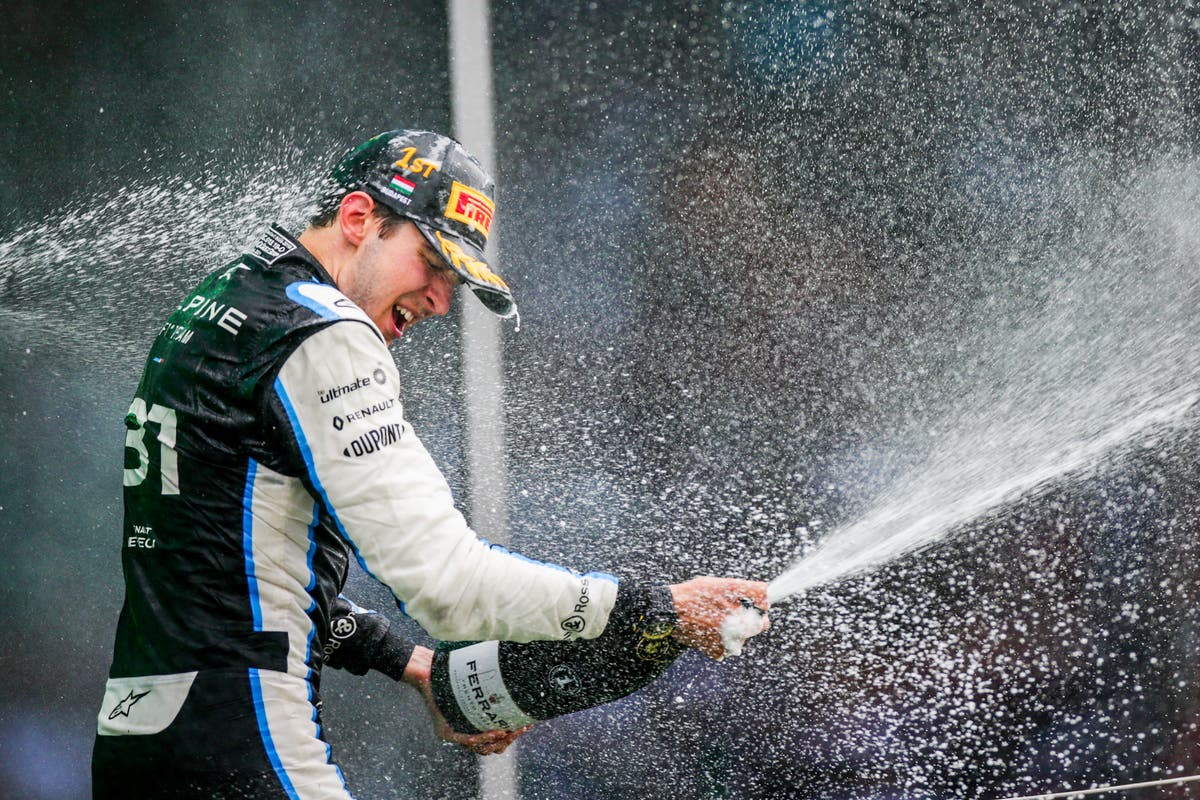
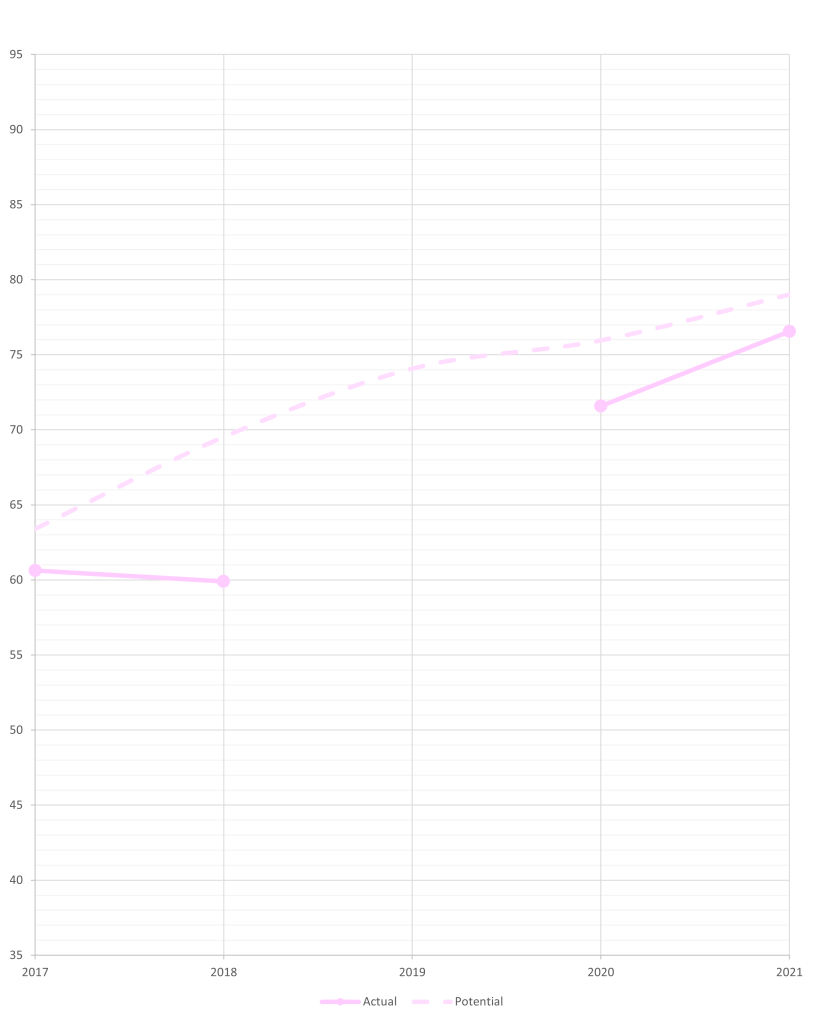
At Force India, Ocon trailed Checo slightly in both seasons. It should have been clear at that point, though, that Esteban would go on to become a better driver than Perez. Unfortunately, he lost his seat anyway and had to sit out for a year.
When he came back with Renault, he underperformed on pace against Daniel Ricciardo, looking more like a 1:1 replacement for Hulkenberg; slower but more consistent. There was an upwards trajectory, though. Ocon started the season around a 67 pace level and improved through the year to end closer to 74 on pace. The dimension of the underperformance suggest that this went far beyond a lack of recent experience. It reads more like he was recovering from a severe injury (like Schumacher in 2010) but as far as I know, nothing of the sorts happened. In any case, that 2020 performance seems to have been an outlier, as no other season of his conforms to the same theoretical trajectory.
The “Good Ones”
8 – Lando Norris
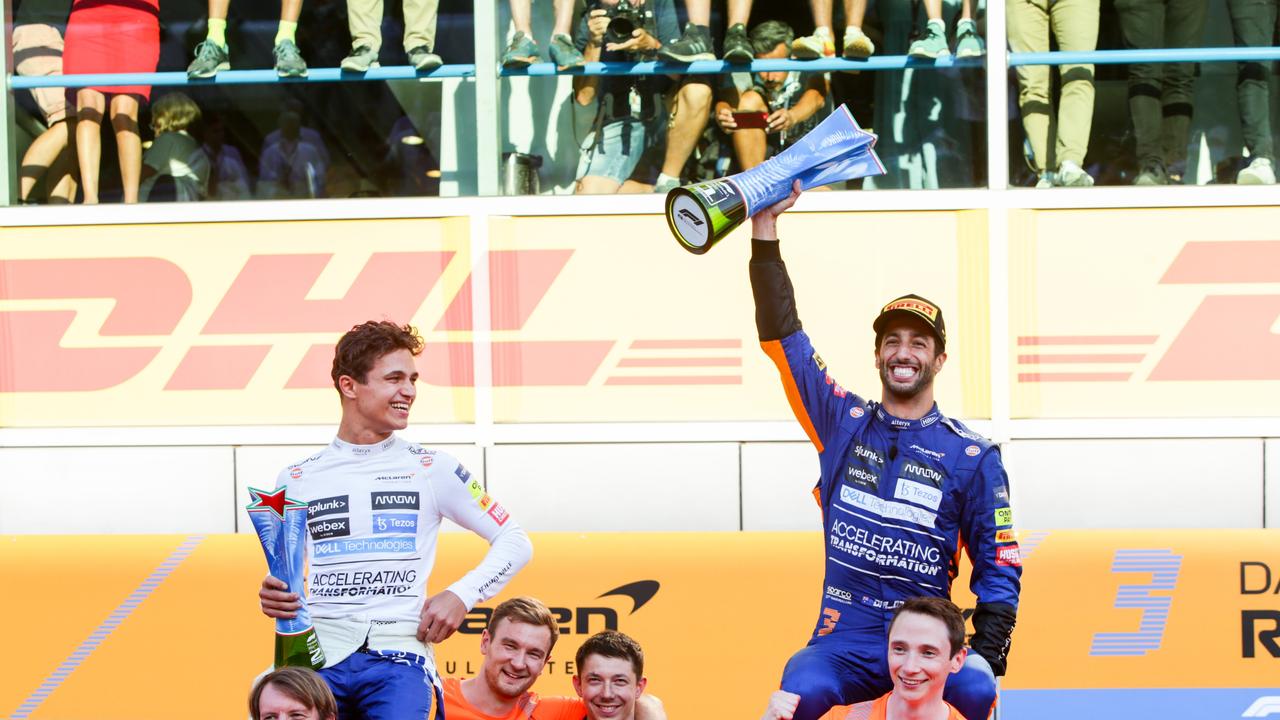
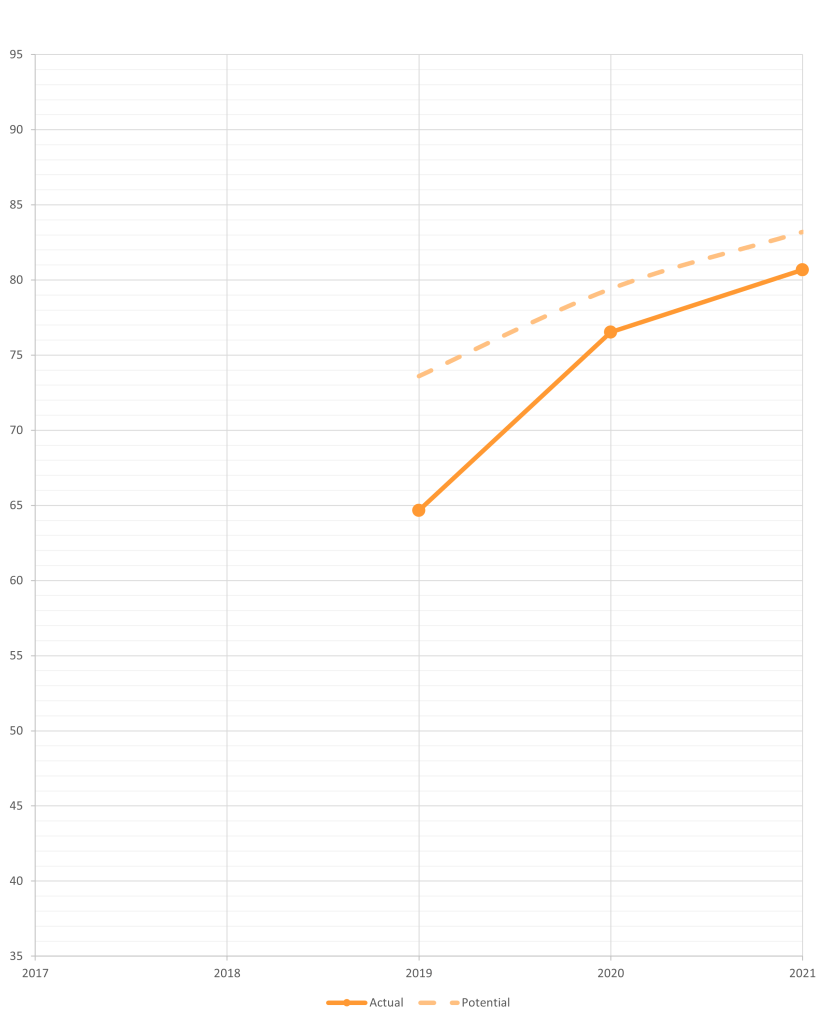
The model rates Lando Norris the highest out of all the 2019 rookies. He is considered to be the most talented of the lot, and is thought to have been the quickest in their rookie season. And yet, rookie of the year would go to George Russell by the model’s estimate. If that isn’t a perfect summary of Lando’s career so far, I don’t know what is.
In the following seasons Norris developed nicely. From 2019 to 2020, he pulled the adjusted (i.a. only counting races) points balance from 41-59 to 47-53. Ranked 6th in 2020 while very close to his teammate, Carlos Sainz, he was not able to outscore him yet. In 2021 Norris partnered up with Daniel Ricciardo. The model rates Sainz and Ricciardo very similar, but the latter famously didn’t get on with the car, making Norris already look like the super star, he is supposed to become eventually. With a score of 80.7 Lando slotted in at 5th that season. While that score would have been enough to beat Sainz in 2020 and 2019, Carlos had an outstanding 2021, scoring 83.2, yet again besting Lando Norris. Were they teammates during 2021, the adjusted points balance would be around 52-48 in Sainz’ favour. Norris could have outscored even that perfect Sainz season, though; he had the pace to do so. However, there was one race in particular, where he lost a lot of points…
7 – Daniel Ricciardo

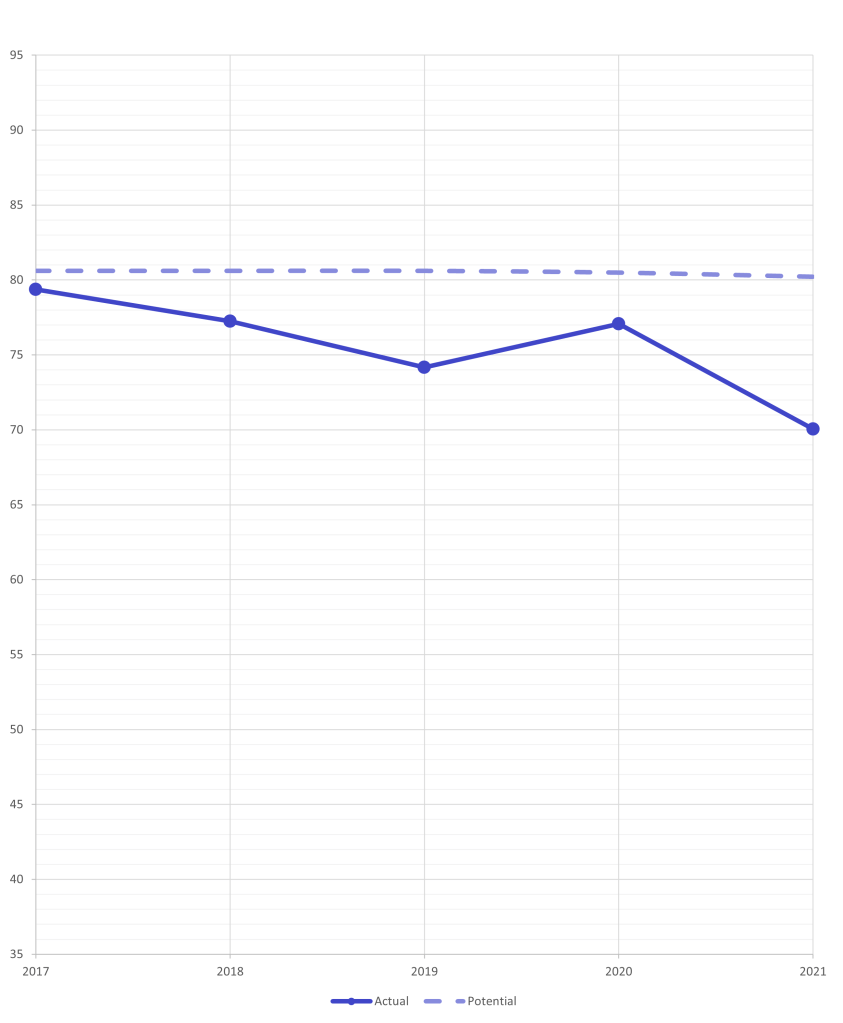
While this time frame kind of splits Ricciardo’s best years, not even his heights are considered spectacular. The public opinion on Daniel seems to widely surpass the model’s assessment. Part of this is surely what he did to Vettel in 2014 but his persona likely influences opinions just as much. Then there are his never boring victories, filled with fantastic overtakes, overshadowing that he generally did not have the pace advantage on a very young Max Verstappen. Something he probably knew all to well, leading to his move to Renault. A lackluster 2019 with several incidents in a very middling car was followed up by one of his better seasons, according to the model.
Ricciardo is rated 4th best in 2018, 5th in 2017 and 2020, 6th in 2019, and only barely loses out on the top 10 in 2021 on account of his win in Monza; a regular top performer, but never in the absolute upper echolon of Formula 1 drivers.
6 – Sebastian Vettel


Sebastian Vettel should have done so much better. The fact that he is not really rated higher than Carlos Sainz and Daniel Ricciardo, even though he is considered to have had superior potential pace, is a testament to the degree of his underperformance. From 2017 to 2019 Vettel was on pace but had his moments (way too many of those in 2018), but in 2020 and 2021 he drove Kimi-esque, showing up every now and again, when a good result was on the table but generally being off the pace.
In fairness to Seb, according to the model, there was no chance of him winning a title, even if he had a perfect season, in any year of this era. Mercedes and/or Hamilton were always too far ahead. In 2018 the cars were the closest, but incindentally, this was Hamilton’s stand out year, meaning nothing was possible anyway. In 2017 and 2019, Vettel and Hamilton were the closest but the car was not quite there in ’17 and far from competitive in 2019. However, this does not mean that no one could have possibly won a championship in those Ferraris. There is one driver further up the list, who might have had a shot in 2017. 2018 is already considered to be completely impossible with the drivers of that year. Hypothetically, a driver of at least Verstappen-2021 caliber and a bit of luck would have been necessary to have a chance to overcome the combined strength of 2018 Hamilton and Mercedes with Ferrari.
5 – Carlos Sainz
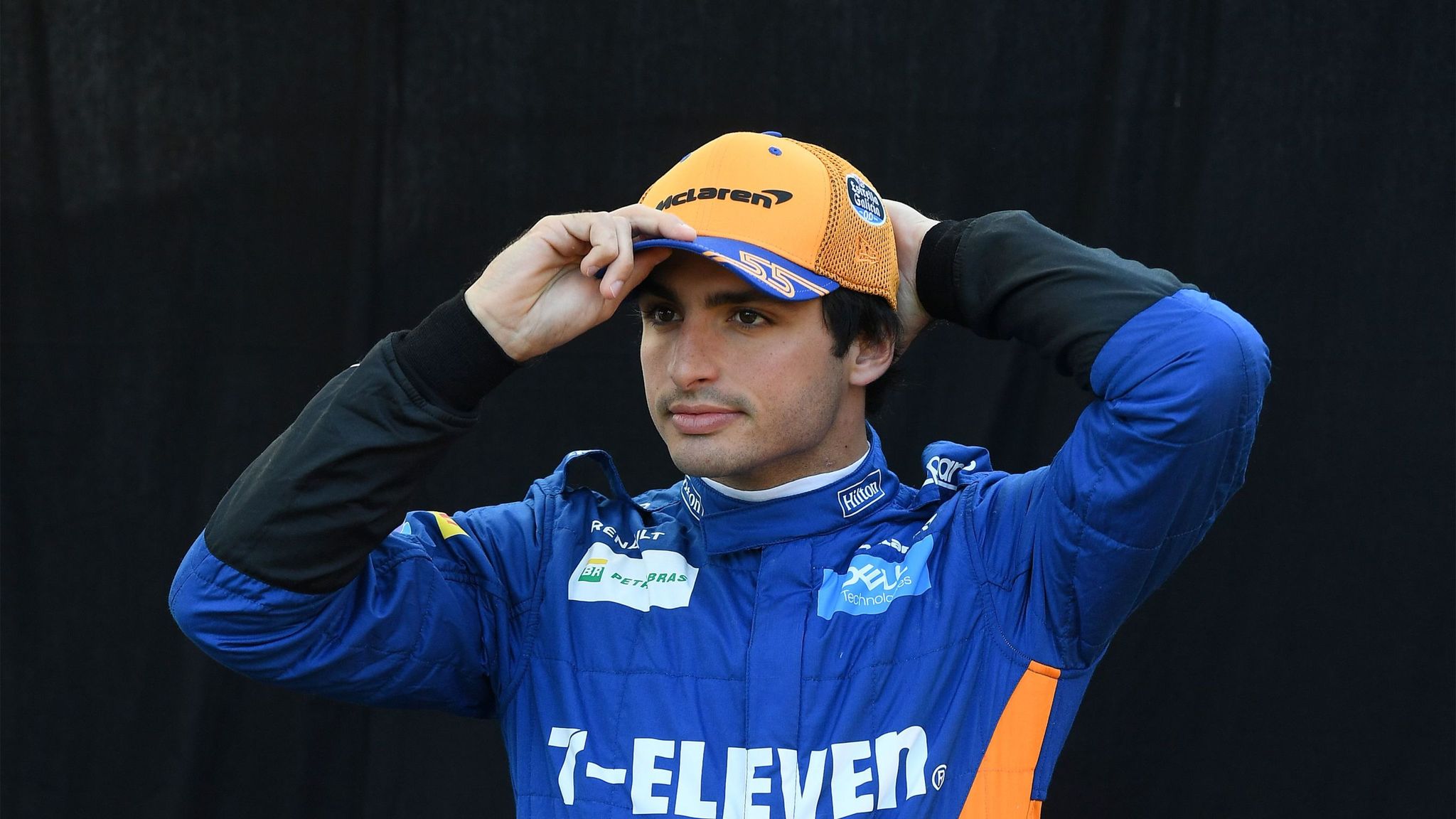
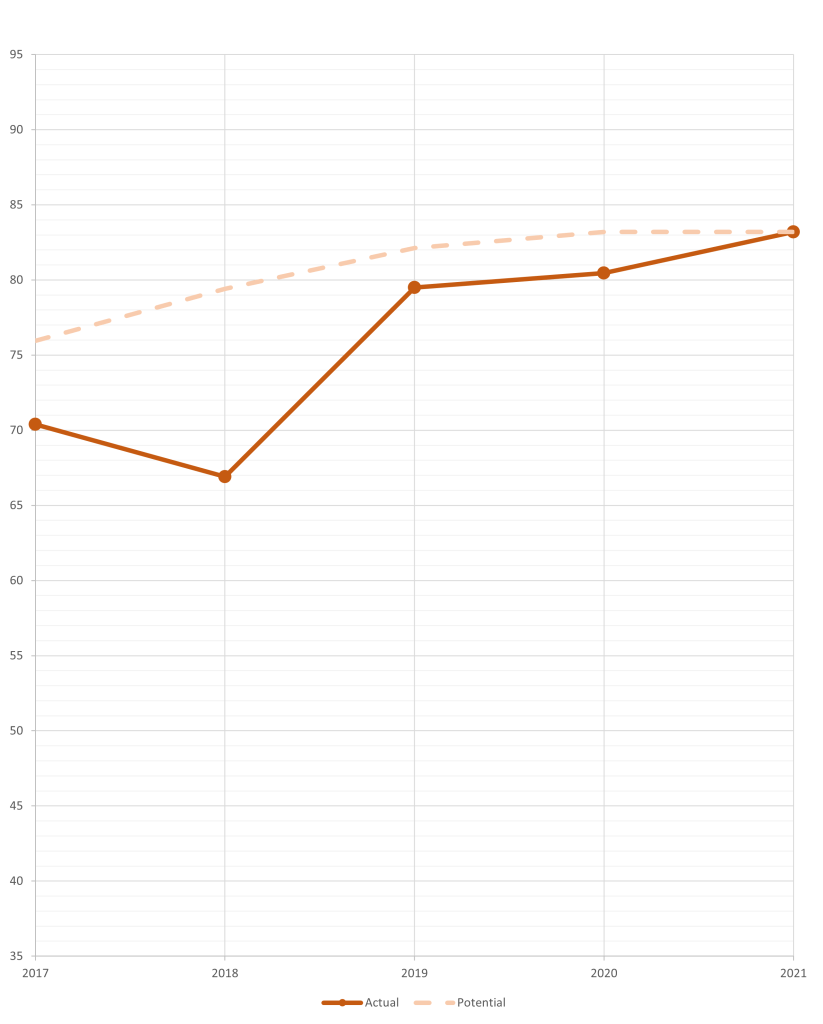
Going to McLaren seems to have been the best thing Carlos Sainz could have done for himself. Apart from the expected improvements to his pace through age and experience, he managed to really clean up his game from one season to another. Even without a model, this was easily noticeable by simply counting the incident affected races each season. Starting in 2017, it goes: 5, 6, 3, 2, 0. This results in a big step in his rating from 2018 to 2019. He peaked in 2021 with the smoothest of operations, putting together a perfect season alongside the golden boy at Ferrari, and, with (more than) a little luck, he even outscored Leclerc in the standings.
The “Greats”
4 – Fernando Alonso

McLaren should be tried for their crime of sticking Fernando Alonso in a backmarker for half of eternity.
By the model’s estimate, Alonso is the only driver in 2017 who had the potential to outdrive Hamilton by enough to overcome the advantage Mercedes had over Ferrari. Assuming Hamilton doesn’t change in this scenario, Fernando would have needed a near perfect season to outscore him and Mercedes with Ferrari. His actual 2017 performance would obviously not do the trick but it should be relatively safe to assume that Alonso in a competitive car can not be compared to those twirls at the back. If burning bridges wasn’t his favourite pastime…
After another disappointing season in 2018, Alonso retired. It seems that in his comeback, he is actually operating on a higher level, relatively speaking. Effectively this only means that he didn’t loose any years out of F1, as his potential in 2021 is pretty much, where he would be expected to be in 2019. But don’t let that fool you, this is absolutely incredible. At this point, it is still a very recent development and therefore equally uncertain.
3 – Charles Leclerc


It’s easy to forget that Charles Leclerc was already a major part of the 2017-2021 era. If you ignore his whole junior career he burst onto the scene out of nowhere in 2018, immediately slotting in as a top driver. The model ranks him 5th in his rookie season. He scores a fantastic 76.4; the best rookie season of the last decades, even beating out Hamilton’s 76.0. Who ultimately scores higher doesn’t even really matter. Driving wise they were on the same level, only their cars’ strength differed. You could argue that Hamilton’s rookie season was more impressive because he managed to navigate a championship fight, but that is a whole other discussion, and one in which Leclerc simply did not have the chance to make his argument.
In his second season he was paired with 4 time WDC Sebastian Vettel at Ferrari. The model sees them as equals, both on pace and overall that year, meaning he would undoubtably go on to outmatch Vettel in the future. That is exactly what happend (although Vettel was also clearly not delivering on his actual level anymore in 2020).
By 2021, Leclerc is considered to be the second fastest driver on the grid, behind only his longtime rival Max Verstappen. He was outscored by teammate Sainz in the standings partly because of bad luck (Hungary and Turkey), but also due to his own fallibility, like in Monaco and Abu Dhabi.
2 – Lewis Hamilton
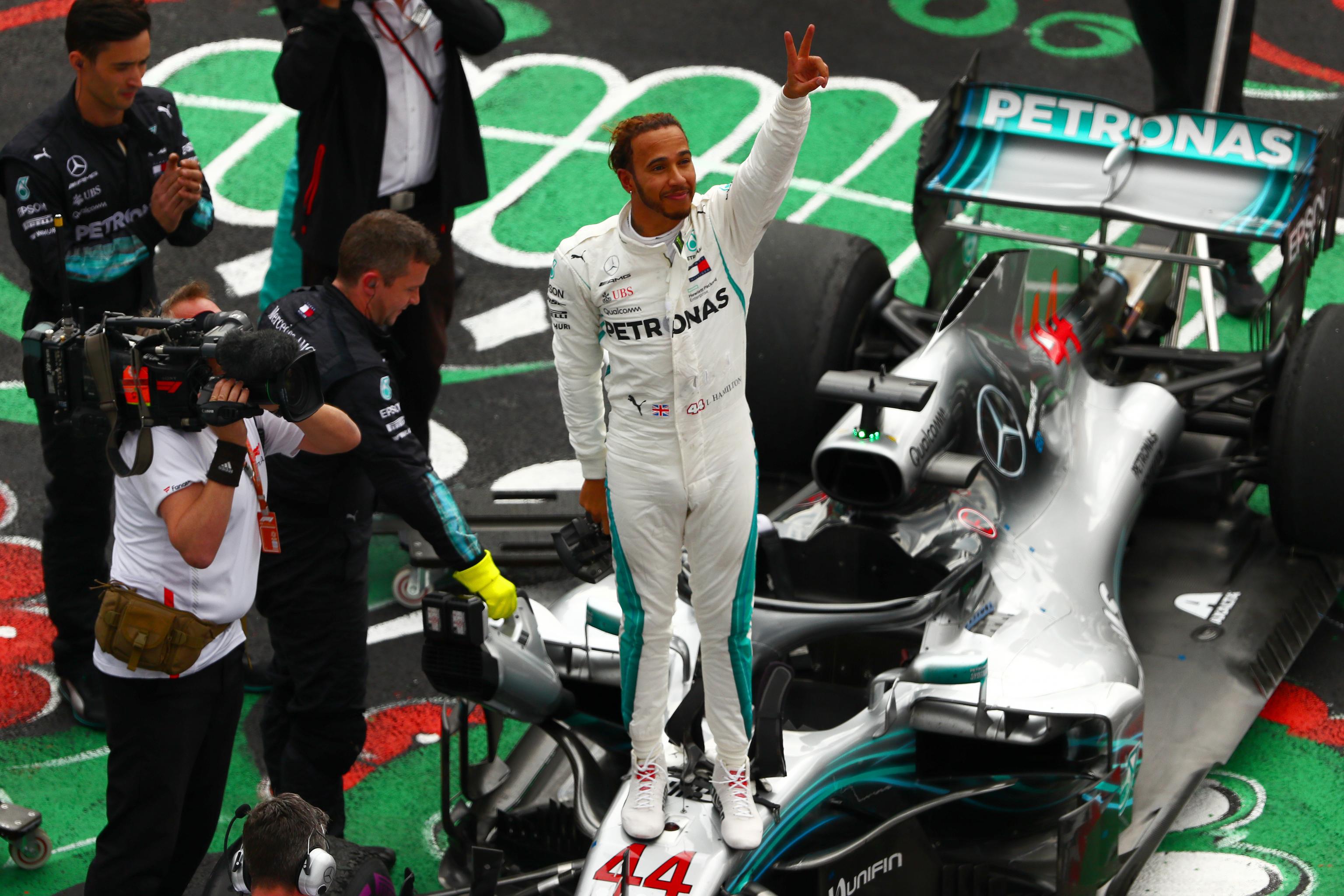
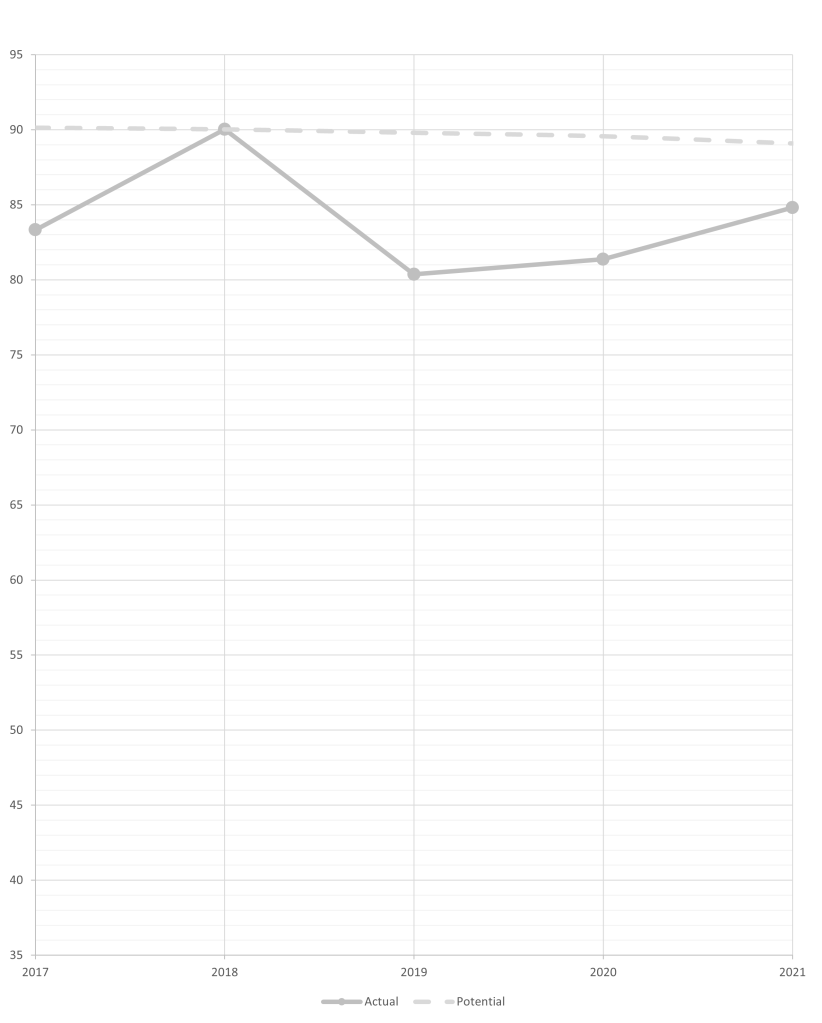
Lewis Hamilton is often cited as some racing machine that doesn’t make mistakes. This is generally not true. 2018 is the clear exception in what is otherwise quite disappointing output, given his potential. 2018 is therefore also the only year of this era in which the model awards him the gold medal. The model’s results would also suggest that, had they switched places, Lewis would have won with Ferrari against Vettel at Mercedes, provided, their performances stayed the same.
He is ranked in the top 3 in all other seasons. 2020 is the only season which could be considered a bit unlucky, as a lapsus in awareness lead to him finishing 7th in Monza; not necessarily a racing error, but an error nonetheless. Had he not pitted illegally, he would have been rated a very close second to Max Verstappen. Without Italy his score for 2020 would be 88.4 to Verstappen’s 88.9. But he did pit.
1 – Max Verstappen
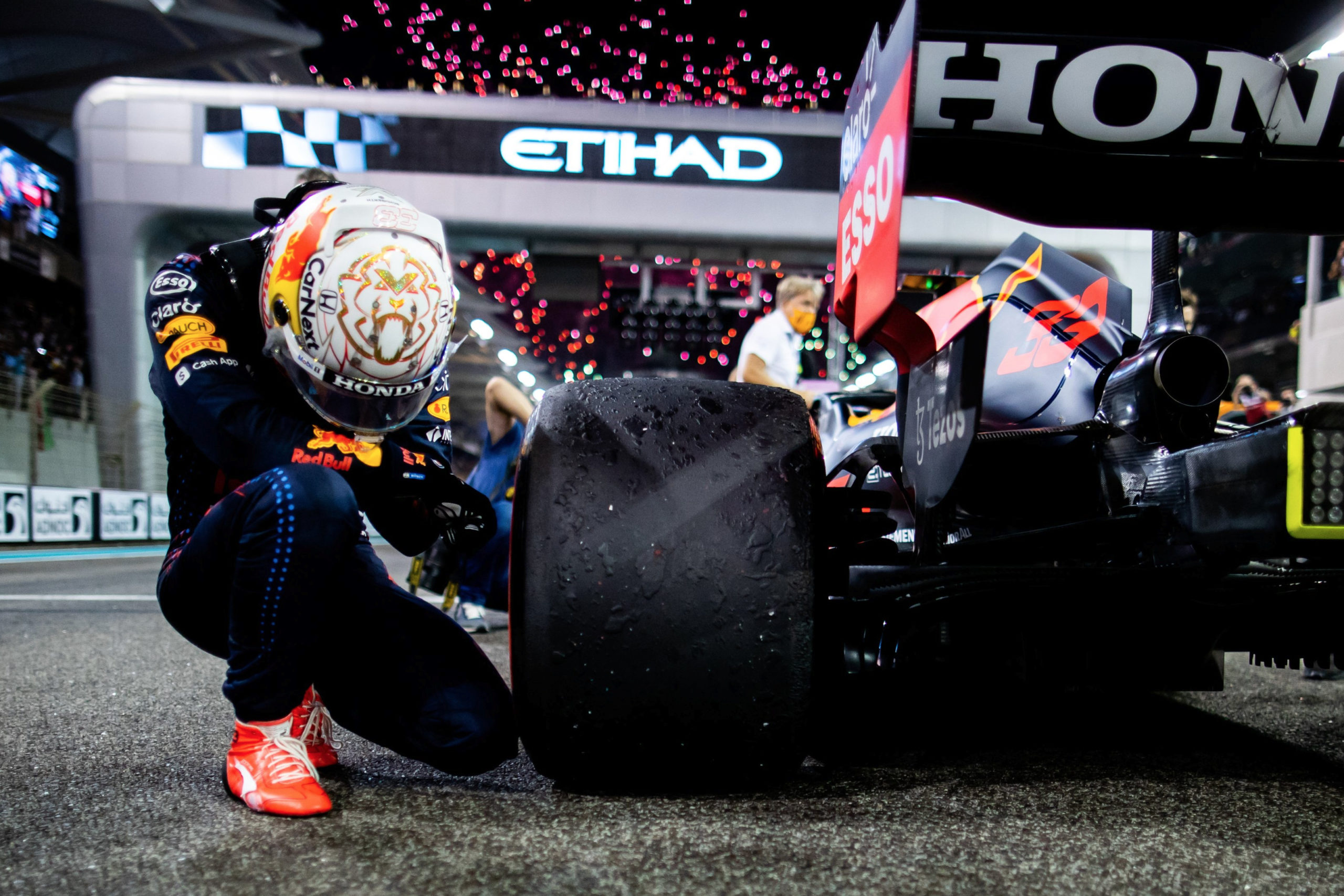
Try as you might, you can’t escape Verstappen P1.
When you look at his graph, one thing will likely immediately catch your attention: How does Verstappen get rated that highly in 2017? While he was outscored by his teammate Ricciardo in the standings, it was pretty obviously not on pace. However, Verstappen did not have more bad luck concerning mechanical failures than Daniel had. The difference in points stemmed mostly from 3 big crashes Max had. The model penalizes driver errors, so what happened? Some types of collisions are exempt from the rule. In Spain and Austria Verstappen gets hit by an out of control car. By the same principle, most drivers are not penalized for the 2021 Hungaroring bowling incident (Verstappen again amongst them). In Singapore Verstappen is the middle part of a sandwich which is another case that gets excluded (only for the middle part). Realisticly, Verstappen might be overrated in 2017 because his bad luck with these incidents and the horrible reliability result in him not seeing the checkered flag in many races. A mistake here or there might have snuck in at some Grand Prix if he wasn’t already watching from the sidelines. Going by his surrounding seasons, a score around 80 would be more in line with expectations.
From 2018 onwards, he gets better and better in every metric, year by year. Since 2020 Verstappen stands alone at the top. He cleared Hamilton on pace after already getting ahead overall in 2019 due to being the more clinical driver.

His 2021 was then the highest rated season since Schumacher in 2001. Championship moves are another type of collision that doesn’t get held against a driver. This includes any incident between championship rivals, as these battles create a situation, where a crash can be the favoured outcome for at least one of the drivers. This leads to Silverstone and Monza not influencing Verstappen’s or Hamilton’s rating.
The Whole Picture
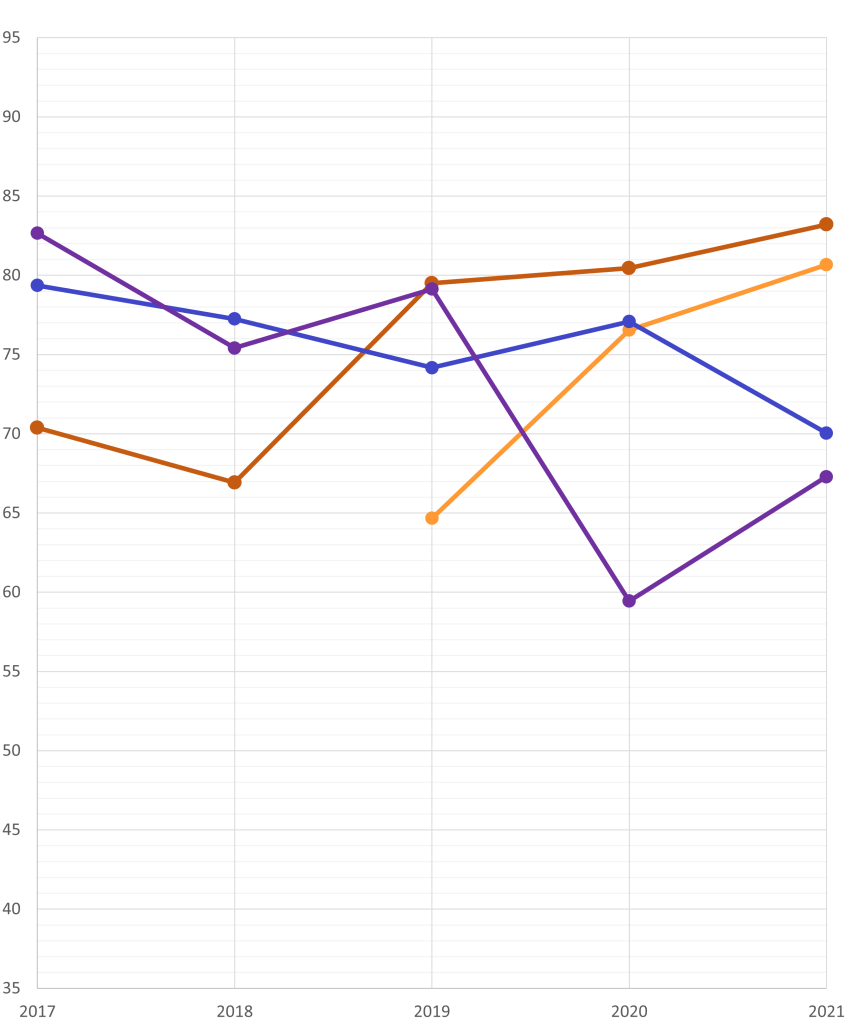
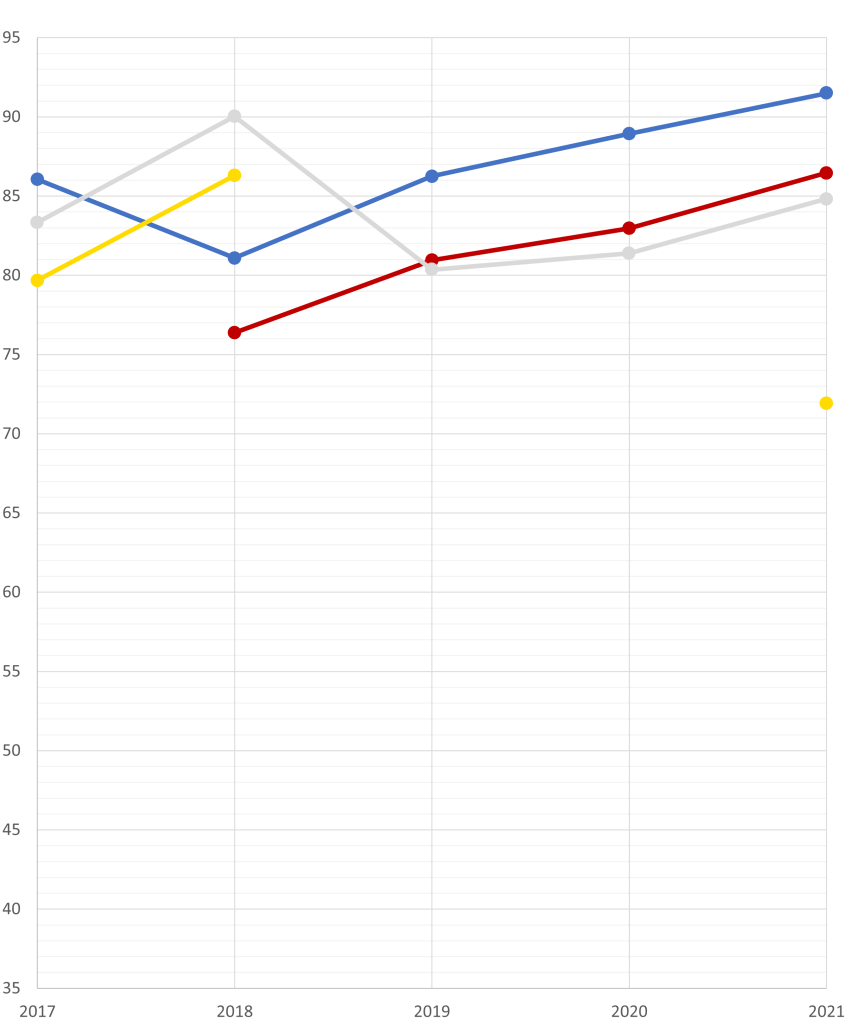
Below I included the annual team principals ratings for comparison. Some observations:
- There seems to be a general adherence to the points standings, most obvious in Hamilton’s and especially Bottas’ rankings through the years, but also in Vettel’s 2018 ranking in contrast to Alonso’s.
- Expectations play a big role. For example, Ocon is ranked 5th in 2017, probably because he was unexpectedly very close to Perez in his almost rookie season. I doubt anyone would argue that he was the 5th best driver of 2017. The opposite can be observed with Vettel in 2019 and Leclerc in 2021, where they might not have delivered to people’s expectations compared to their new teammate.
- The criteria seem to be inconsistent. As an example, in 2017, Verstappen ranks above Ricciardo (eventhough Daniel had more points), presumably because Verstappen was the quicker of the 2. However, in 2021 Leclerc ranks below Sainz in a similar situation. This has to be expected since, at the end of the day, the team principles are also just humans ranking mostly on subjective opinion and on top of that they are obviously not one entity but 10 different people (and not even the same 10 every year) with different views.
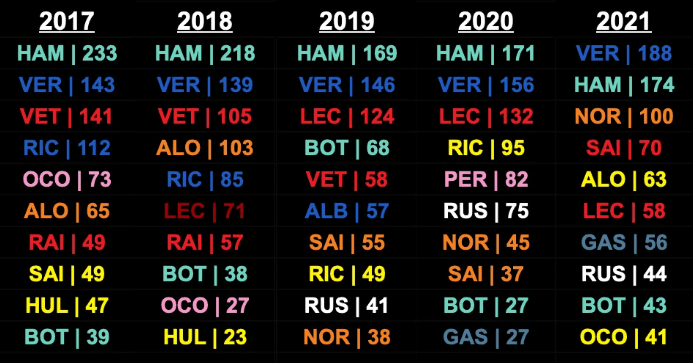

As visible above, the highest rated seasons between 2017 and 2021 were Verstappen in 2021, scoring 91.5, Hamilton’s 2018 at 90.0, and Verstappen’s 2020 with 88.9. Verstappen takes 4 model titles (although 2017 is ambiguous due to Hamilton being within uncertainty), while Hamilton only manages to hold on to 1. He had the potential to get up to 4, with the only untouchable season being Verstappen’s 2021. The closest any other drivers came were 2018 for Fernando Alonso, and Vettel in 2017.
A trend that began earlier and is still going on now, started to effect the upper half of the grid during this era. More and more good drivers replace what was the above average tier. The spread in driver quality is getting ever slimmer. This results in car performance becoming even more clearly the differentiating factor.
Kimi Raikkönen just barely missed the cut-off, scoring 64.9 over the era, carried by a relatively strong 2018 (69.2). The next in line are Wehrlein (64.1) who possibly represents a similar case to Vandoorne, Magnussen (61.6), Grosjean (60.6) who was generally faster than Magnussen but didn’t bring his points home often enough.
There were several bad (below 50) performances in this era but only 1 was truly terrible. In 2018, Brendon Hartley scored 27.6 next to Pierre Gasly at Torro Rosso in their semi rookie season.
A Quick Look At The Teams
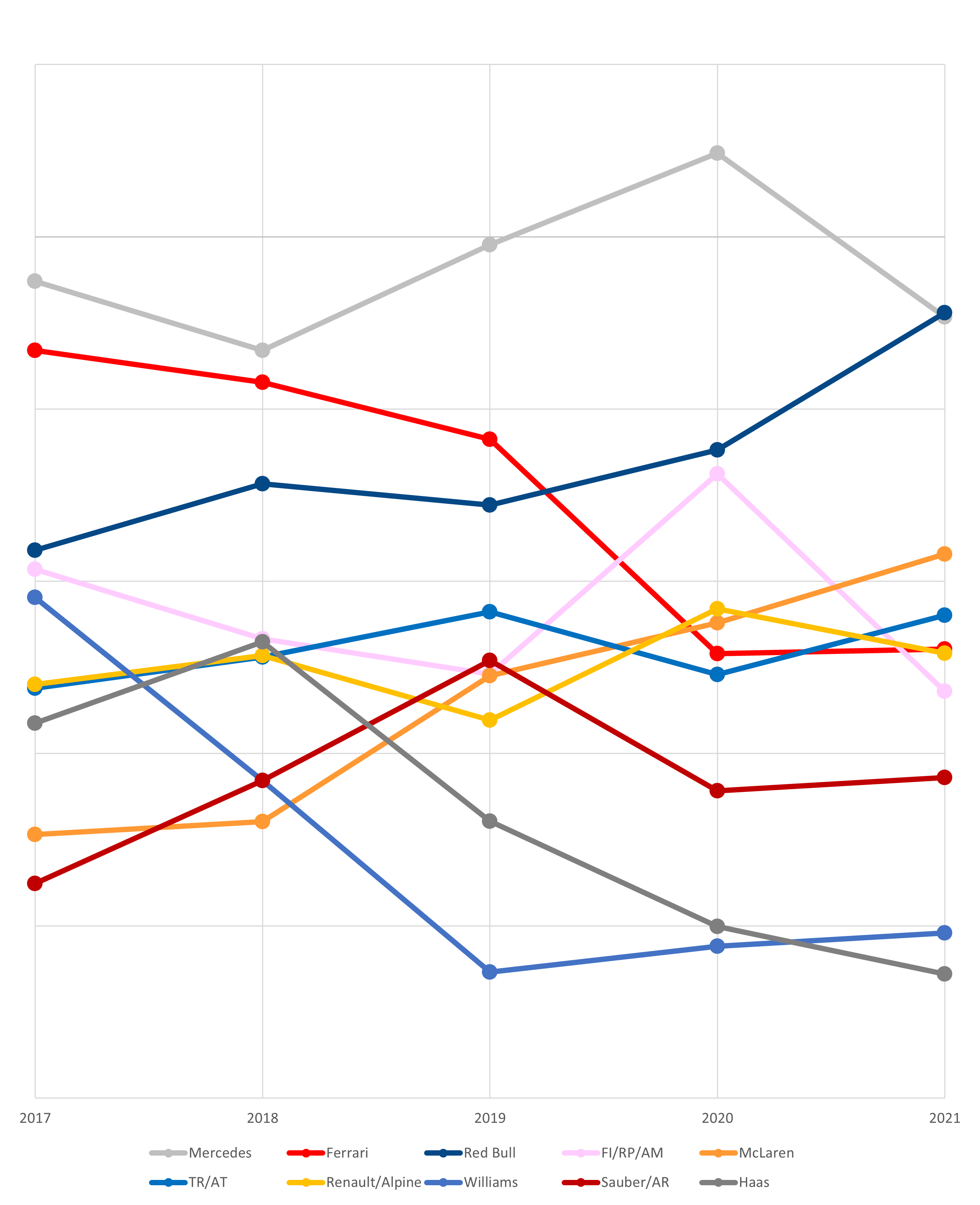
Agenda item No.1: Mercedes and Red Bull were equals over the whole of 2021. This also means that before the “spicy engine”, Red Bull held an advantage according to the model.
I don’t think that diagram needs any more explanations but I want to draw attention to first Williams’ and then Haas’ slide into the abyss of uncompetitiveness. Notice how far below normal backmarker level they got eventually. Especially Williams in 2019 was completely isolated and that’s probably still overrating them, since Hockenheim skews their results upwards due to other drivers crashing out (Williams were not quick enough to slide off).
As a side note: 2017 was unsurprisingly the season with the highest amount of reliability problems throughout the grid. Even less surprising is that the McLaren of that year is the single most unreliable car of the era.
There were two very noteworthy driver pairings over the course of the 5 seasons. Vettel/Leclerc had the potential to be another one, but too many incidents by both in 2019, and a lack of trying from Vettel in 2020 prevented it from really happening. His successor at Ferrari fared better:
- 2021 – Leclerc/Sainz – 84.9
- 2017 – Verstappen/Ricciardo – 83.0
- 2018 – Hamilton/Bottas – 81.1
- 2019 – Leclerc/Vettel – 80.1
- 2018 – Alonso/Vandoorne – 79.7
- 2018 – Verstappen/Ricciardo – 79.2
 F1 Mathematical Model
Leave a comment